Implant Surgery
Understand your options for replacing missing teeth, what treatment may involve, and how to prepare for a conversation with your dentist.
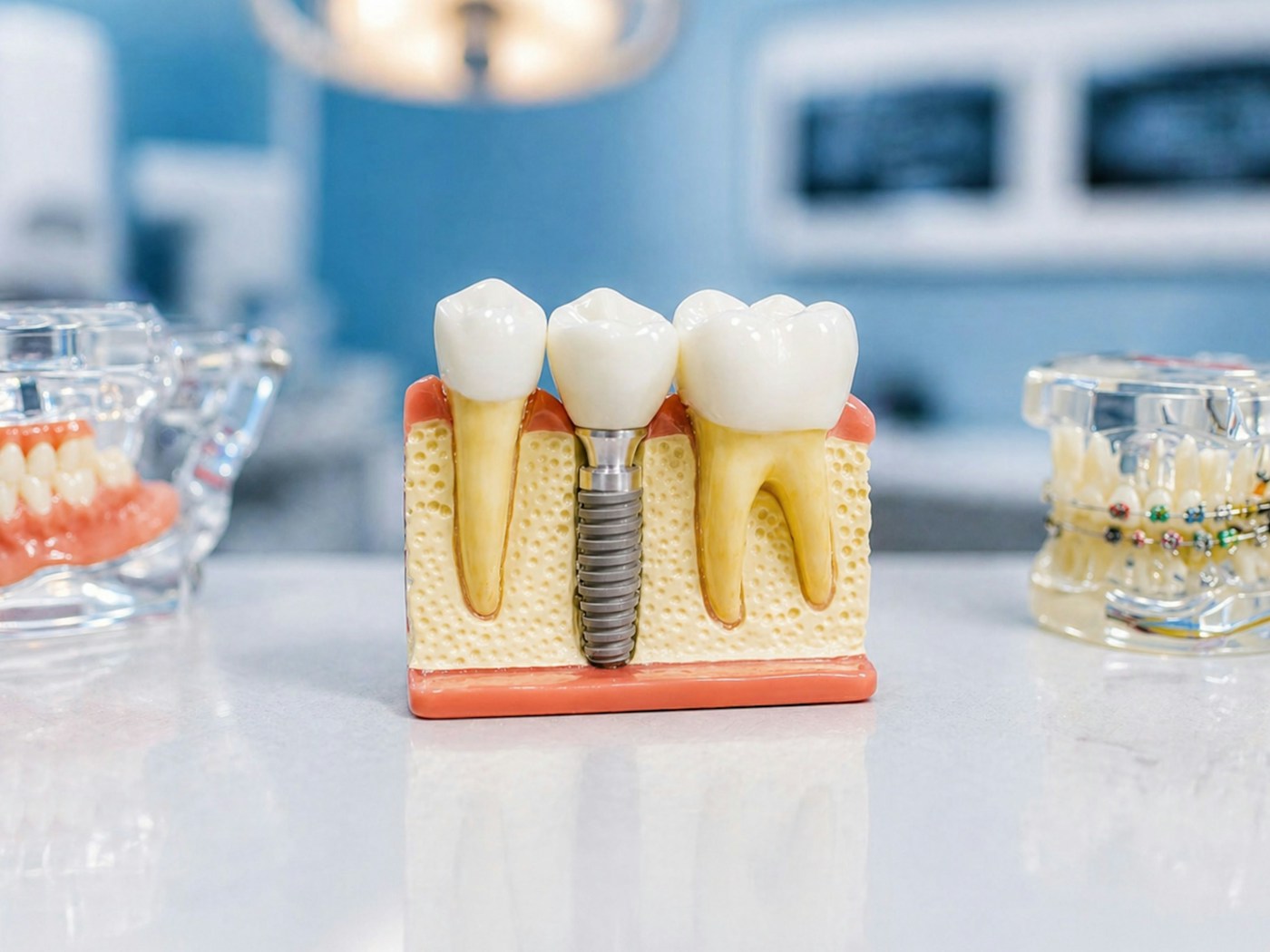
A foundation for replacement teeth
A dental implant is a small post placed in the jaw to support an artificial tooth. A connector, called an abutment, joins the implant to a crown, bridge, or denture. Implants can replace one tooth, several teeth, or help support a full arch.
Why consider dental implants?
Implants may improve chewing, support your smile, and make replacement teeth feel more stable. They can also help preserve bone where teeth are missing. The right option depends on your mouth, health, and priorities.
Is implant treatment right for you?
Your dentist will review your medical history, gums, and available jawbone. Some people need gum treatment or bone grafting before implants. Smoking and certain health conditions can affect healing. Suitability requires an examination, not an online quiz.
What does treatment involve?
- Planning: Discuss your goals, examine your mouth, and review imaging and treatment choices.
- Placement: The implant is positioned in the jaw during surgery. Your clinician will explain anesthesia and preparation.
- Healing: Bone gradually integrates with the implant. This stage commonly takes several months.
- Your replacement teeth: Once appropriate, a custom crown, bridge, or denture is attached.
Healing and ongoing care
Recovery and the full treatment timeline vary. Follow your clinician’s instructions for food, cleaning, and follow-up visits. Ask whether a temporary replacement is suitable while you heal. Daily cleaning and regular dental visits remain important after treatment.
Understand the risks
Possible complications include infection, injury to nearby structures or nerves, loosening, and failure of the implant to integrate with bone. Additional treatment may be needed. Tell your dentist promptly if an implant becomes loose or painful.
Common questions
Will treatment hurt?
Anesthesia is used during placement. Some soreness or swelling can occur afterward; ask your clinician about your comfort and recovery plan.
How long will an implant last?
Implants can be long-lasting with appropriate care, but results vary. Crowns, bridges, or dentures attached to implants may need repair or replacement.
What will treatment cost?
Ask for a personalized estimate covering surgery, any preparatory care, and the final restoration. Insurance benefits and payment arrangements should be discussed with the office.
Start with a conversation
Explore your goals before scheduling your visit.
General educational information; your dentist will recommend care for your individual needs.